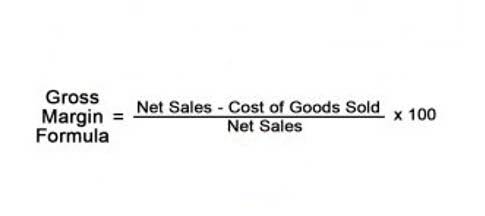
It reflects your ability to control your costs and optimize your pricing strategy. Return on sales (operating margin) can be used both as a tool to analyze a single company’s performance against its past performance, and to compare similar companies’ performances against one another. The ratio varies widely by industry but is useful for comparing different companies in the same business. As with many ratios, it is best to compare a company’s ROS over time to look for trends, and compare it to other companies in the industry.
How Companies Use the IncomeOutcome Simulation for Business Acumen
A company might have a high ROS but be heavily leveraged, leading to potential financial instability. To get a more comprehensive understanding, investors should also consider other metrics like debt-to-equity ratio and net profit margin. A good return on sales is 5 to 20 percent, depending on industry statistics. That means your company is producing favorable operating profitability of at least 5 to 20% on its net revenues. Therefore, the 30% return on sales ratio implies that if our company generates one dollar of sales, $0.30 flows down to the operating profit line.
- If not, it is necessary to review the overall approach, cut the discounts (if there are many active ones), and focus on products with higher marginality.
- Return on Sales (ROS) is a crucial financial ratio, measuring efficiency and profitability by revealing the percentage of sales that turn into profits.
- Firms that succeed in the industry are just more profitable, thanks to that and stronger pricing power, high margins on digital products, and efficient cost management.
- Monitoring your ROS regularly gives you early warning signs of inefficiencies and guides smarter, more profitable decision-making.
- Businesses utilize ROS to compare their growth and performance against competitors, irrespective of company size.
- Dip into the macro magic with VBA to automate the entire process, and you’ll have yourself a hands-free ROS experience.
A practical example of calculating ROS
- Return on Sales (ROS) is a powerful profitability ratio that shows how efficiently your business turns revenue into operating profit.
- Return on sales informs creditors and investors about the company’s profitability and cash flow health, helping them make informed decisions regarding reinvestment, dividends, or debt repayment.
- Operating profit is calculated as earnings before interest and taxes (EBIT).
- As new revenue comes in, you’re constantly spending a piece of that revenue just to keep your company going.
- ROS only measures profitability based on accounting principles, which may not reflect the actual cash flow of a company.
It should be used in conjunction with other ratios, such as return on equity (ROE), return on investment (ROI), and debt-to-equity ratio, for comprehensive financial analysis. The negative 17.57% OPM reported by HDFC Bank in March 2024 is considered poor and indicates declining profitability. An OPM below 0% means the company’s operating expenses exceeded its revenues, leading to an operating loss. The significant drop from previous years, CARES Act when OPM ranged between 30-35%, signals worsening performance and potential financial struggles for HDFC Bank. In other words, Jim spends 80 percent of the money he collects from customers to run the business.
Discover how Sales Cloud uses data and AI to help you close deals fast.
Further, during the year, the company incurred an interest expense of $15,000 and How to Start a Bookkeeping Business paid taxes of $10,000. With Intrinio’s data solutions, you can access the comprehensive financial information you need to calculate ROS and other key metrics. Whether you’re an investor, analyst, or financial professional, Intrinio is your trusted partner for reliable financial data and insights. Management can use ROS to assess the impact of strategic initiatives, such as cost-cutting measures, price adjustments, or product launches. By tracking changes in ROS before and after implementing a new strategy, leaders can measure its effectiveness in enhancing profitability.

A comprehensive analysis of these metrics will provide a more accurate understanding of return on sales your company’s financial health and performance. The return on sales is a ratio used to derive the proportion of profits generated from sales. The concept is useful for determining the ability of management to efficiently generate a profit from a given level of sales.

How can sales forecasting impact ROS?

Depending on the accounting practices used, a firm’s earnings and expenses for a given period can be tweaked to appear higher and lower, respectively, than they should be. It’s important to recognize that many companies have both cause and method for presenting a higher return on net sales result than may be warranted. Secure more client contracts and grow your business with a compelling bid proposal template. For help creating great visual aids (i.e. graphs, pie charts, etc.) and accurate sales forecasts to communicate with your key stakeholders, check out Pipedrive’s Insights and Reports feature.
Is there a difference between ROI and ROS?
This calculator facilitates the easy computation of the Return on Sales percentage, helping users to quickly evaluate the operational efficiency of businesses. Return on sales is an important metric with a variety of applications. If you want to know how efficiently you’re turning over profit, you should understand what ROS is and how to calculate it yourself. It can also be used to compare your company’s performance, relative to other companies. That being said, return on sales can vary significantly from industry to industry and scale to scale. So if you’re using ROS to compare your business with another, it only makes sense if that business is your space.